


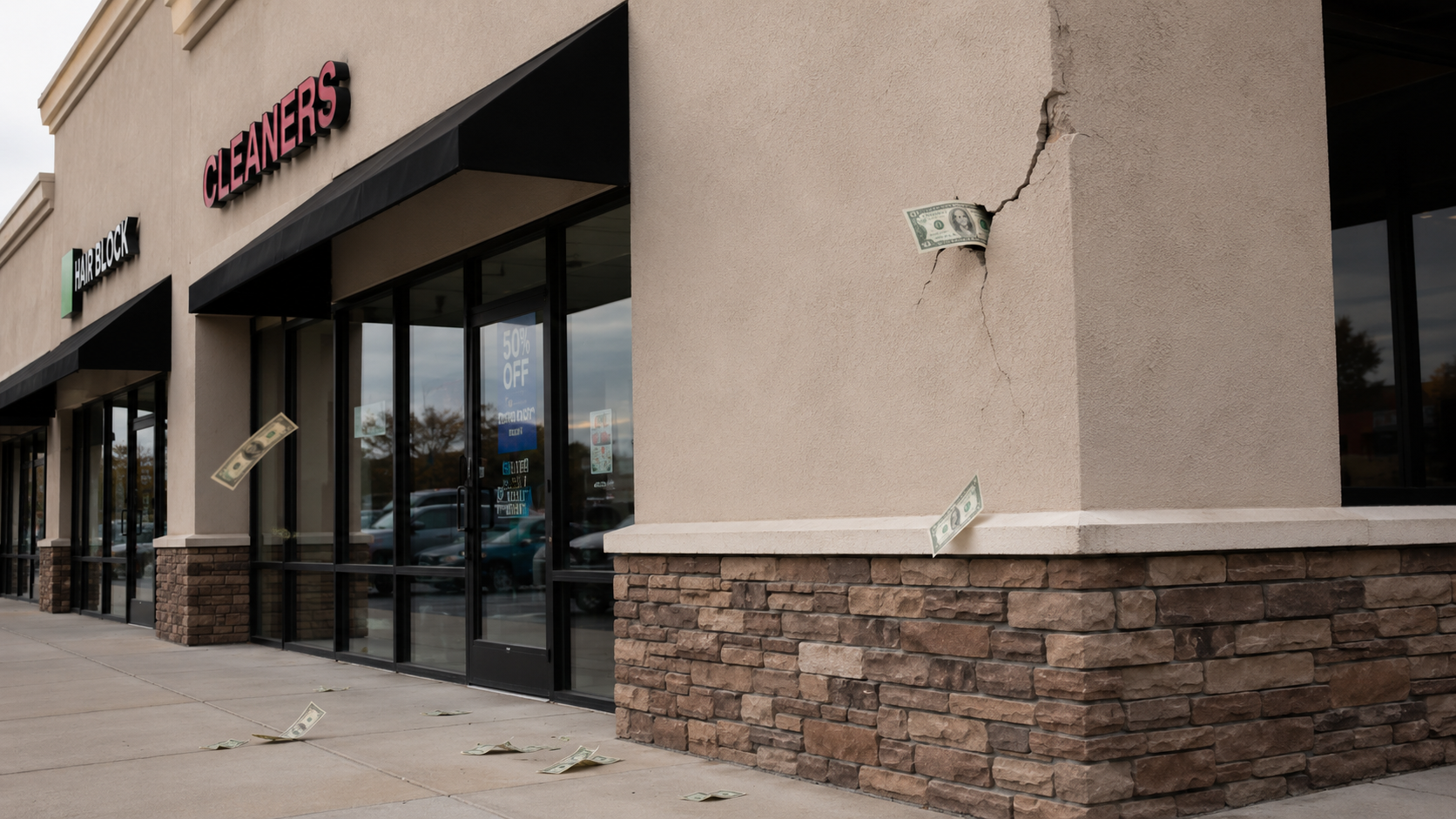
As a commercial landlord, you’re probably used to roof leaks and pipe leaks, but the hidden leaks that will take more work than calling a roofer or plumber to fix are those places where your property is slowly draining you of potential income.
The tricky part is that the biggest losses don’t always show up as one dramatic event. It’s usually not one giant mistake wearing a flashing neon sign that says, “Hello, I am draining your NOI dry.” More often, money leaks out through small cracks: a lease clause that wasn’t enforced, a maintenance item that got pushed off until it snowballed into a massive remediation, a vacant suite that sat too long, or a budget that existed only as wishful thinking.
And because commercial properties have many moving parts (leases, vendors, maintenance schedules, CAM rec, renewal dates, and so much more) it’s easy for an owner to miss things. Especially if managing the property isn’t your full-time job.
The good news? Most of these losses are preventable. Not always easy, but preventable.
Let’s walk through some of the most common ways commercial property owners lose money without realizing it, and what you can do to tighten things up.
Poorly defined lease structures
Commercial leases are not all created equal. A full-service gross lease, modified gross lease, triple net lease, and industrial gross lease can all shift costs differently between landlord and tenant.
The problem starts when the lease structure is vague. If it’s not crystal clear who pays for taxes, insurance, utilities, HVAC maintenance, janitorial, roof repairs, parking lot maintenance, trash, landscaping, pest control, or common area expenses, someone will eventually be unhappy.
And that someone is usually the person who thought they were getting reimbursed.
A poorly defined lease structure can also make your property harder to value. Buyers and lenders want to understand income and expenses. If your leases are inconsistent or unclear, they may treat the income as riskier, which can affect pricing, financing, and marketability.
How to avoid it
Use a commercial lease drafted or reviewed by a qualified attorney. Then read it like an owner, not like someone trying to get through it before lunch. Ideally, all of your tenants should have very similar leases. Yes, some will negotiate changes, but the more similar your leases are, the simpler they will be to manage.
Your lease ideally answers these basic questions:
- Who pays for what?
- When are reimbursements due?
- Are expenses billed monthly, annually, or after reconciliation?
- Are there caps, exclusions, base years, or expense stops?
- What happens if the tenant disputes the charges?
You don’t need to become a lease attorney. But you do need to understand the economic deal you signed. The lease is not just legal paperwork. It’s the instruction manual for your cash flow. Make sure you read and understand it.
Missed expense recoveries
This is one of the sneakiest ways owners lose money.
Many commercial leases allow landlords to recover some or all property operating expenses from tenants. These may include real estate taxes, insurance, common area maintenance, utilities, landscaping, repairs, security, trash removal, management fees, and other costs, depending on the lease.
Operating expense escalations based on past expenses and budget projections are commonly used so the landlord’s net rent is not reduced by normal inflation in the cost of operating, maintaining, and repairing a building.
But having the right to recover expenses and actually recovering them are two very different things.
Owners lose money when they:
- Forget to bill CAM charges.
- Don’t reconcile expenses annually.
- Exclude recoverable expenses by mistake.
- Use the wrong tenant pro-rata share.
- Fail to apply gross-up provisions where allowed.
- Don’t update estimated monthly charges when costs increase.
- Avoid billing because they’re afraid tenants will complain.
That last one deserves a small spotlight. Tenants may not love receiving reconciliations, but that doesn’t mean the owner should absorb costs the lease allows them to recover. You can be fair and still run the property like a business. In fact, the fairest approach is usually transparency and consistency.
How to avoid it
Create a lease abstract for each tenant. This should summarize key financial terms: rent, increases, recoverable expenses, exclusions, caps, admin fees, management fees, base years, pro-rata shares, billing frequency, reconciliation deadlines, and notice requirements.
Then set calendar reminders. Not vague “remember CAM someday” reminders. Real deadlines. And be prepared to share CAM reconciliations with tenants so that they know what to expect.
Monthly: review expenses and tenant billbacks.
Quarterly: compare actual expenses to budget.
Annually: reconcile recoveries according to the lease.
Untracked maintenance and delayed upkeep
A small roof leak becomes damaged insulation, stained ceiling tiles, tenant complaints, mold concerns, and an insurance fight. A parking lot crack becomes potholes, trip hazards, drainage issues, and a resurfacing bill that has you peering into the abyss and questioning your life choices. An HVAC unit that needed routine service decides to die in August, because HVAC units have a flair for drama.
Preventive maintenance is not just about keeping the property pretty. It protects income, tenant retention, safety, and asset value.
How to avoid it
Keep a preventive maintenance schedule for all major systems:
- Roof inspections
- HVAC service
- Fire/life safety systems
- Parking lot and sidewalks
- Exterior lighting
- Plumbing
- Electrical panels
- Irrigation
- Landscaping
- Pest control
- Elevators, if applicable
Track work orders. Track vendor recommendations. Track repeat issues. A tenant who calls three times about the same leak is not being “difficult.” Your building is talking to you. Listen.
Be sure to separate repairs from capital planning. Some items are routine expenses. Others are larger capital items that need to be planned years in advance. Major roof repairs, HVAC replacements, parking lot resurfacing, and major plumbing work should not be routine. Inspections of your systems should be.
Not creating and following a budget
A property without a budget is like driving across Alligator Alley at night with the headlights off. You might get there. Or you might meet something toothy.
A budget helps you forecast income, expenses, capital needs, and cash flow. It also gives you a way to spot trouble early. If insurance was budgeted at $18,000 and renews at $29,000, you need to know that quickly. If repairs are running 40% over budget by June, you need to ask why.
The mistake some owners make is preparing a budget once and then ignoring it. That’s not budgeting. That’s making a wish and putting it in a folder.
How to avoid it
Create an annual operating budget before the start of each year. Include:
- Scheduled rent
- Vacancy assumptions
- CAM or expense recoveries
- Real estate taxes
- Insurance
- Utilities
- Maintenance and repairs
- Landscaping
- Janitorial
- Security
- Professional fees
- Management fees
- Marketing/leasing costs
- Capital reserves
Then compare actual results to the budget monthly or at least quarterly. When numbers are off, don’t just shrug. Ask what changed and whether you need to adjust.
The budget should help you make decisions. Can you afford to repave this year? Should CAM estimates be increased? Is a tenant improvement allowance reasonable? Are you charging enough rent to justify the operating costs?
Weak tenant retention
Owners often focus so hard on finding new tenants that they underestimate the value of keeping good ones.
Tenant turnover costs money. You may have downtime, leasing commissions, legal fees, tenant improvements, free rent, cleaning, repairs, signage changes, and staff time. Even when you replace the tenant quickly, the cost of turnover can chew through a surprising amount of income.
Retention doesn’t mean letting tenants walk all over you. It means being responsive, fair, and consistent so good tenants want to stay.
How to avoid it
Communicate before there’s a problem. Check in periodically. Ask whether the space still works for them. Make repairs promptly. Keep common areas clean and safe. Enforce rules consistently so one tenant’s mess doesn’t become another tenant’s reason to leave.
Pay attention to tenants whose businesses are growing or shrinking. A growing tenant may need more space. A shrinking tenant may need a smaller footprint. If you can solve their space problem within your property, you may keep them instead of watching them move down the street.
The cost of self-management
Self-management can work. Some owners do it very well, especially if they have a small property, strong systems, good vendor relationships, and enough time to stay on top of the details.
But self-management is not free.
It costs time. It costs attention. And sometimes it costs money when things slip through the cracks.
The most expensive part of self-management is often not the task you know you need to do. It’s the thing you didn’t know you were supposed to do. CAM reconciliations. Rent escalations. Insurance tracking. Maintenance logs. Vendor compliance. Budget variance reviews. Market rent analysis. Renewal strategy. Tenant default notices. Documentation.
It can be a lot of work. Lease income is not passive income. At least not if you are managing your own investment.
How to avoid it
If you self-manage, build systems. Use checklists. Use calendar reminders. Keep clean files. Abstract your leases. Review financials monthly. Track maintenance. Reconcile recoveries. Talk to tenants before they’re upset.
You can also hire help for pieces of the process without handing over the whole property. For example, you might use a broker for leasing, an accountant for taxes and paying vendors, an attorney for lease review, or a property manager to just handle those parts that you don’t have time for like vendor management or CAM Reconciliation.
Professional management can be a good solution when the property is too complex, the owner is too busy, or the income being missed is greater than the management fee. And don’t forget, if your lease allows it, the management fees can be recovered. But the real goal is not to push every owner into the same box. The goal is to make sure the property is being run intentionally.
The common thread: Small leaks can cost you big money
Most commercial property income loss doesn’t happen because an owner is careless. It happens because the property is more complicated than it looks from the outside.
A lease clause won’t enforce itself. A budget won’t monitor itself. And a roof definitely won’t repair itself, although it may wait for a holiday weekend to announce its needs.
The best way to protect your income is to create a rhythm of review. Review leases, rent rolls, expenses, maintenance, vacancies, vendor contracts, insurance, budgets, and keep reviewing them.
You don’t need to obsess over every paperclip. But you do need to know where the money is coming from, where it’s going, and whether the property is quietly asking for attention. Because in commercial real estate, the money you don’t lose is just as important as the money you collect.
Is your property leaking profits? Contact us for a Free Profit Leak Assessment.
Find out where your commercial property may be quietly losing money.